Restaurant Fit-Out Approval in Dubai: A Step-by-Step Guide
Restaurants carry more regulation than any other fit-out in the UAE. Rent runs from handover, so every week lost to a rejected drawing is money out the door.
This is the sequence a restaurant fit-out actually follows in Dubai, and where it usually goes wrong.
Start with the landlord, not the authority
Units inside malls run by Emaar, Nakheel, DAMAC or Majid Al Futtaim need a tenant-coordination submission to the mall management before anything is lodged with an authority. That review covers the shopfront, signage, MEP loads and the fire strategy.
Going to the authority first and the mall second is the most common way to lose a month.
The approvals a restaurant needs
An F&B fit-out is not one approval but several, and they do not all come from the same place:
- Landlord or mall tenant-coordination NOC
- Authority design review — DM, DDA, Trakhees or the free-zone authority
- Food Safety review of the kitchen layout
- Civil Defence approval, including the kitchen-hood suppression system
- Grease trap and plumbing NOC
- Gas connection NOC, where gas is used
- The final fit-out permit
The kitchen is where submissions fail
Kitchen layouts are reviewed by Dubai Municipality's Food Safety Department, and the requirements are specific: separation of raw and cooked preparation areas, wash-up arrangements, finishes, and the flow of staff and waste through the space.
Designers who have not done F&B before tend to lay out a kitchen for efficiency and then discover the layout fails on separation. Designing against the food-safety requirements from the first sketch avoids a redraw.
Extraction, fire and the suppression system
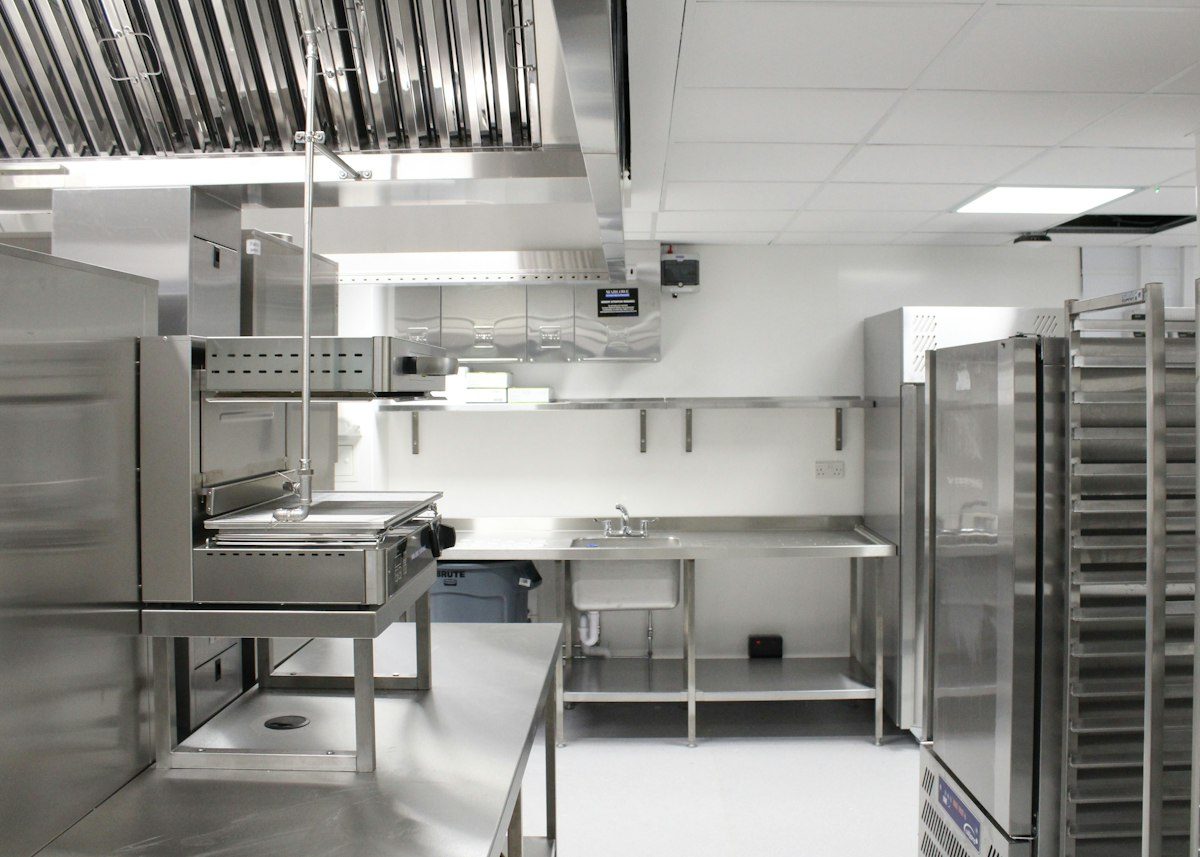
Kitchen exhaust hoods need a Civil Defence approval covering the suppression system, and the extract route has to be coordinated with the building's own systems. In a mall, that route is often the constraint that shapes the whole kitchen position.
Your drawings and your trade licence must agree
The approved drawings and the trade licence have to describe the same business. A licence that says cafeteria against drawings that show a full production kitchen will not pass, and correcting it late means going back through review.
How long it takes
A typical restaurant fit-out approval cycle is 6–10 weeks end-to-end, covering landlord NOC, municipality or authority design review, Civil Defence approval, Food Safety review of the kitchen layout, and the final fit-out permit.
Restaurants in malls owned by Emaar or Nakheel also need the mall management's tenant-coordination sign-off. Run in parallel with the authority submissions, it need not extend the programme.
Converting an office or shop into a restaurant
A change of use is a major authority intervention, not a formality. It requires a fresh trade-licence review, a landlord NOC, change-of-use approval from the municipality or free-zone authority, an MEP capacity review, an updated Civil Defence assessment, and a Food Safety review.
It is worth establishing whether a unit can become an F&B outlet before signing the lease, not after.
Getting it approved
Das And Partners prepares the drawings, the structural design and every authority submission for work like this across Dubai, Abu Dhabi and Sharjah. See Fit-Out Approvals, or send us the details and we will confirm which approvals apply, a realistic timeline and a fixed fee.
Frequently asked questions
How long does a restaurant fit-out approval take in Dubai?
A typical restaurant fit-out approval cycle is 6–10 weeks end-to-end, including landlord NOC, municipality / authority design review, Civil Defence approval, Food Safety Department review of the kitchen layout, and the final fit-out permit. Restaurants in malls owned by Emaar or Nakheel also need the mall management's tenant-coordination sign-off, which can be coordinated in parallel.
Do I need a fit-out permit to renovate a leased shop or restaurant in Dubai?
Yes. Any tenant fit-out that alters internal partitions, MEP services, kitchen or wet areas, fire-detection layout, or signage requires a fit-out permit from the relevant authority — Dubai Municipality, DDA, Trakhees, the master developer, or the free-zone authority. Civil Defence approval is also typically required.
Does converting an office into a restaurant need separate approval?
Yes. A change of use requires a fresh trade-licence review, landlord NOC, change-of-use approval from the municipality or free-zone authority, an MEP capacity review, an updated Civil Defence assessment, and a Food Safety review if the new use is F&B.
What usually delays a restaurant fit-out?
Kitchen layouts that fail the Food Safety review, Civil Defence approval of the kitchen-hood suppression system, and a trade licence that does not match the approved drawings. Lodging the landlord and authority submissions in parallel avoids most of the lost time.